Realism, deliberately broken
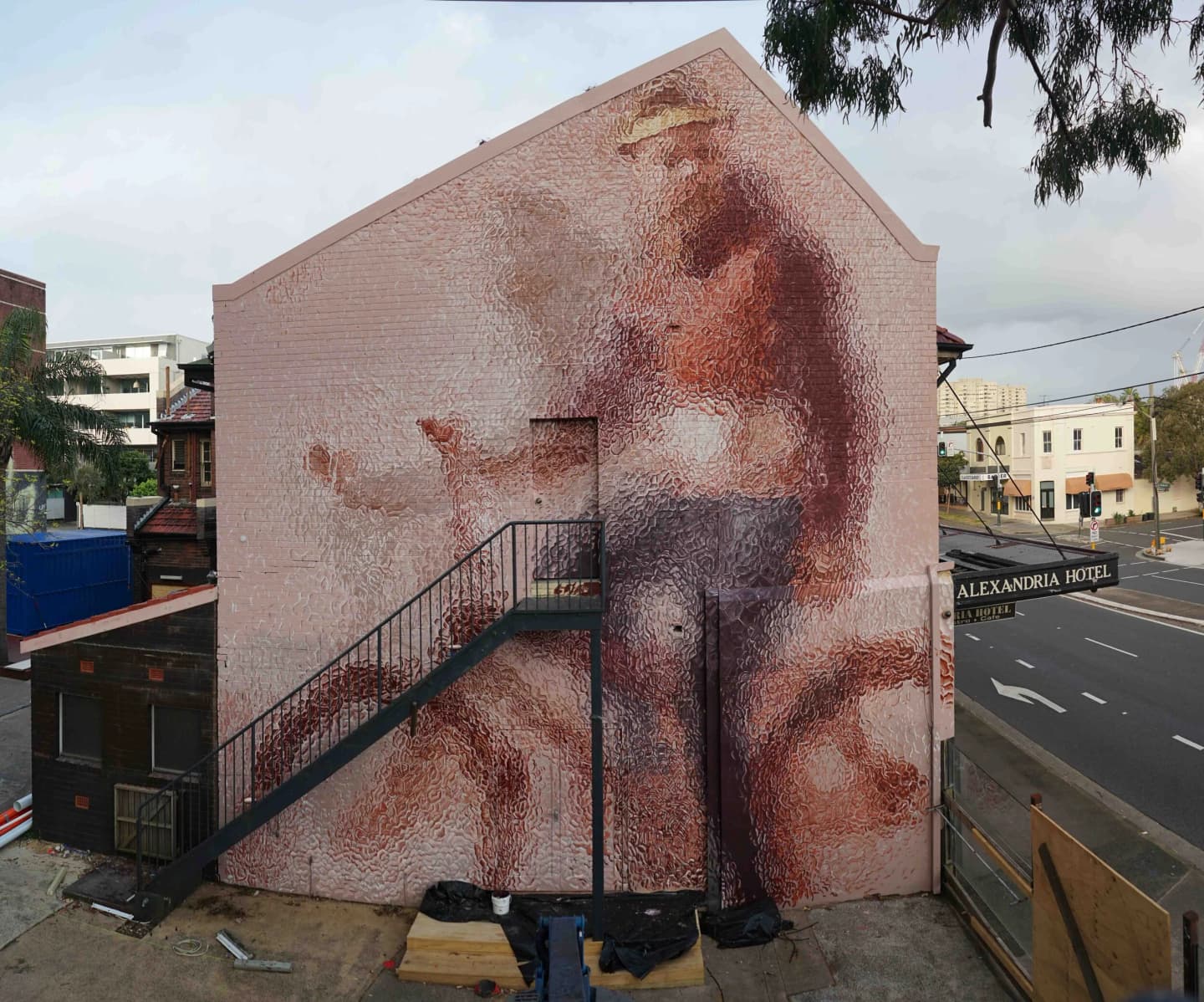
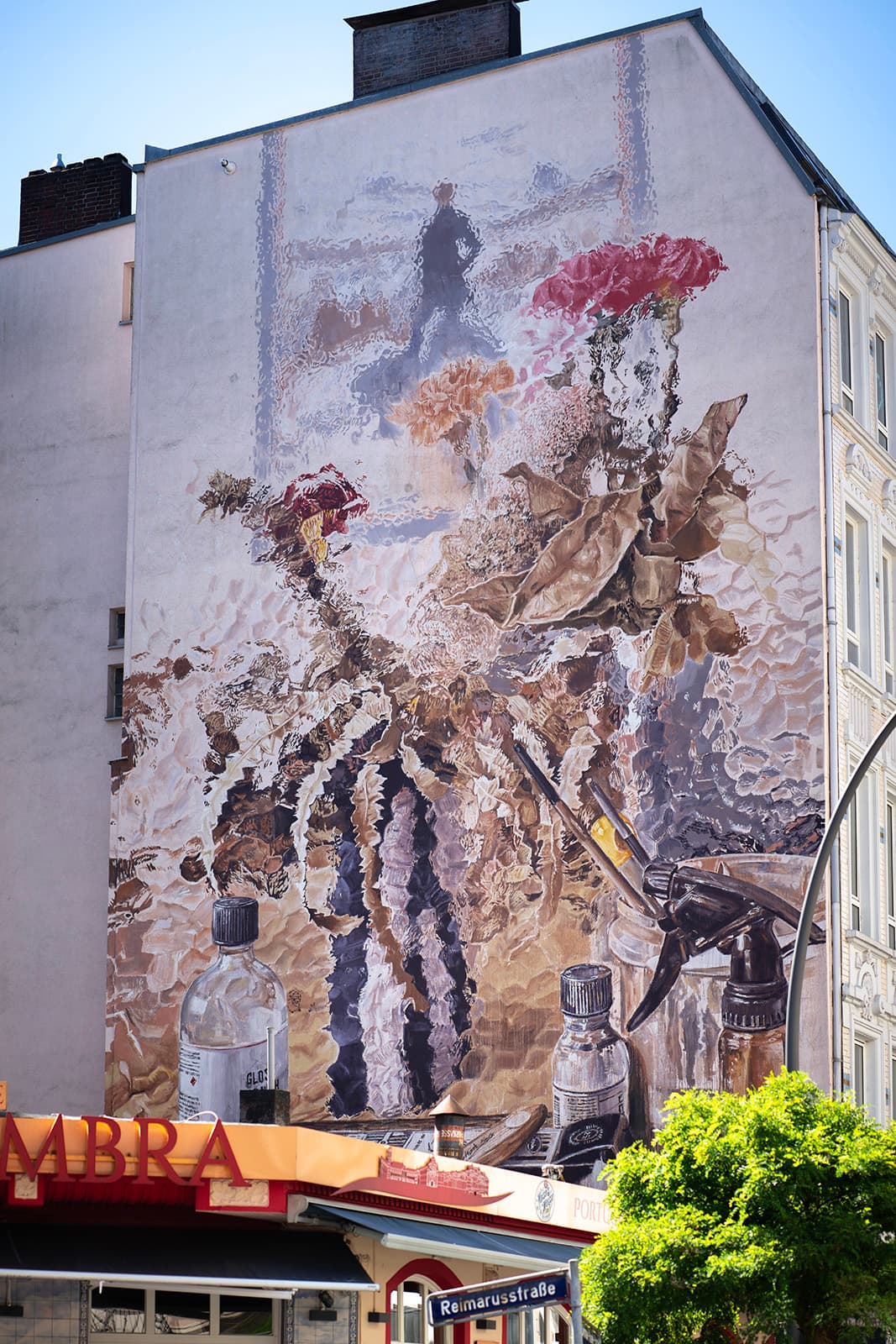
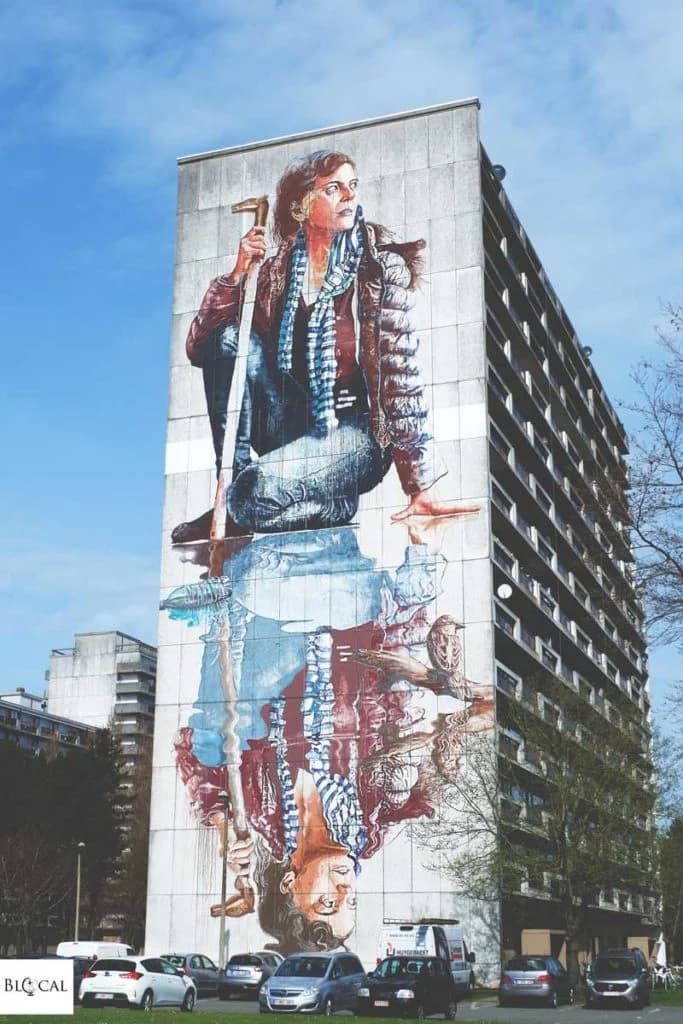
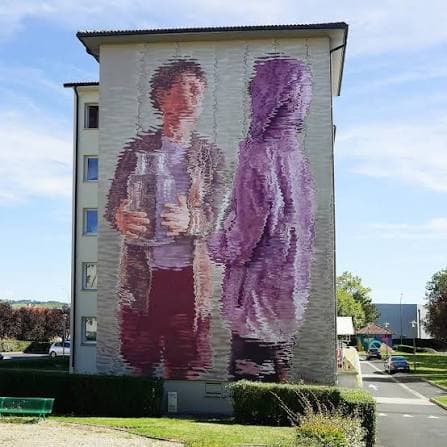
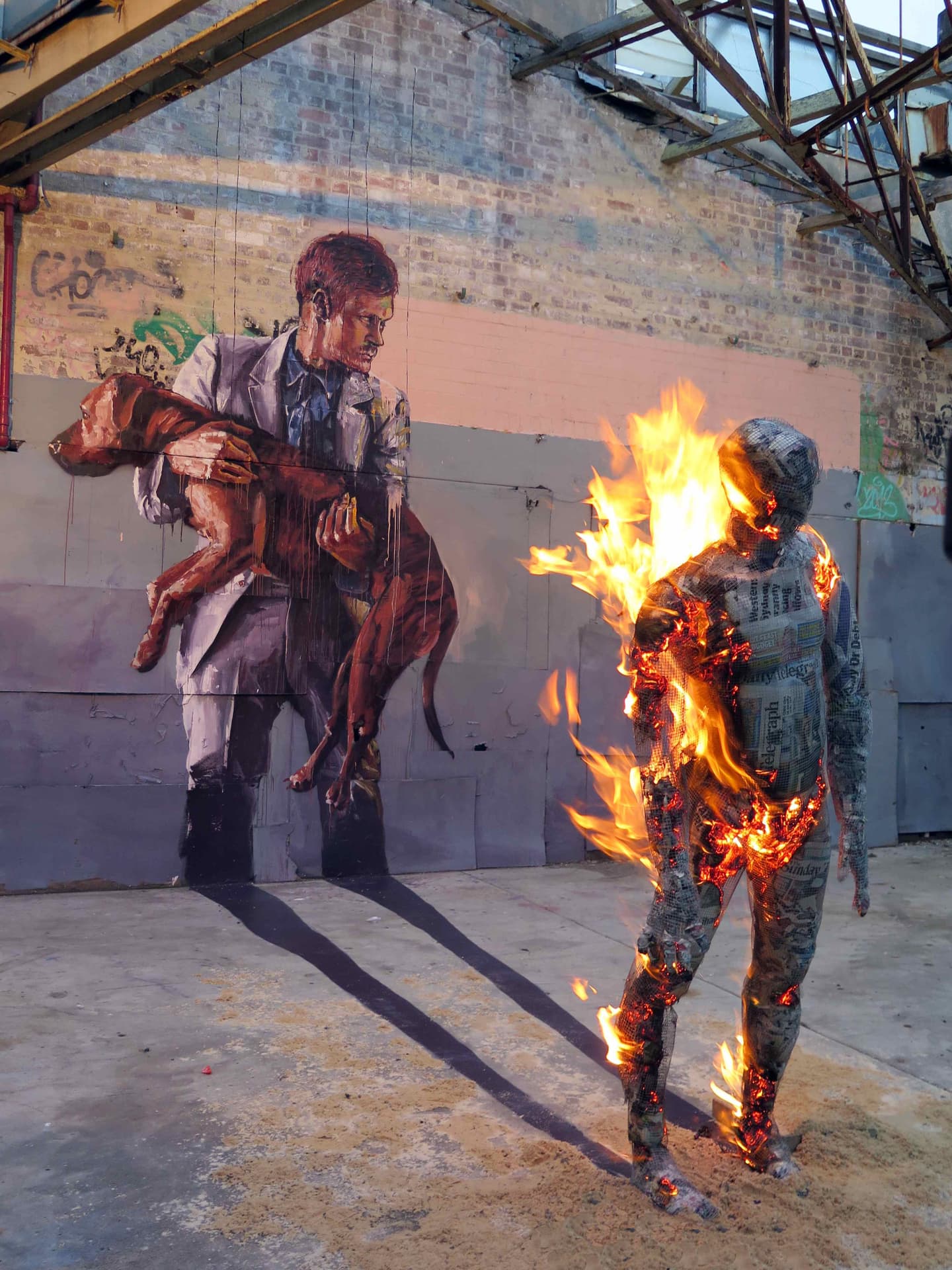
3 of 3Realism, deliberately brokenChur, BenerparkIf you get close to a Fintan Magee mural, something strange happens: the picture falls apart. That's on purpose. He spent years perfecting a realist style — painting people so accurately they could almost be photographs — and then decided that wasn't where he wanted to stay. Once you've nailed realism, he figures, the interesting thing is to start pulling it apart.
So now he blurs. He paints figures as if you're looking at them through frosted, ribbed glass — the kind you get in an old bathroom window — or through a smeared lens. He'll smudge the paint, scratch into it, break the image down. From across the street it reads clearly; up close it dissolves into marks, and your own eye does the rest, putting the picture back together.
And the blur means something to him. It stands for things that are hard to hold onto: time slipping past, memories going fuzzy, people who slowly fade from view and stop being seen. The fuzziness asks you to lean in and look harder — which is exactly the idea.
If you want to place the style, he points to painters like Gerhard Richter and Chuck Close: artists who take a sharp image and deliberately disturb it.
The mural itself is made by hand — outdoor acrylic and a brush, up on a lift. He wants it to look handmade and a little raw when you're close, because that texture is what keeps a giant wall feeling human. And it is giant: painting an ordinary person at the height of a building is his way of giving them the kind of monument usually reserved for someone important.