A thousand-year building site
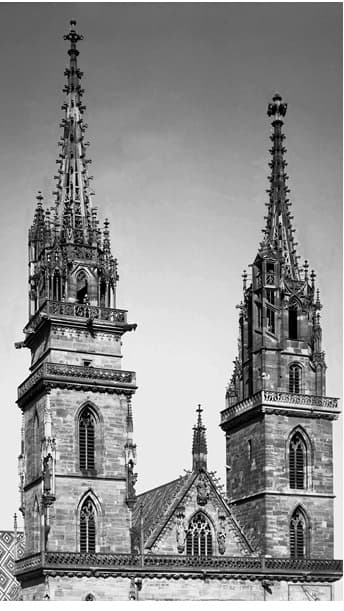
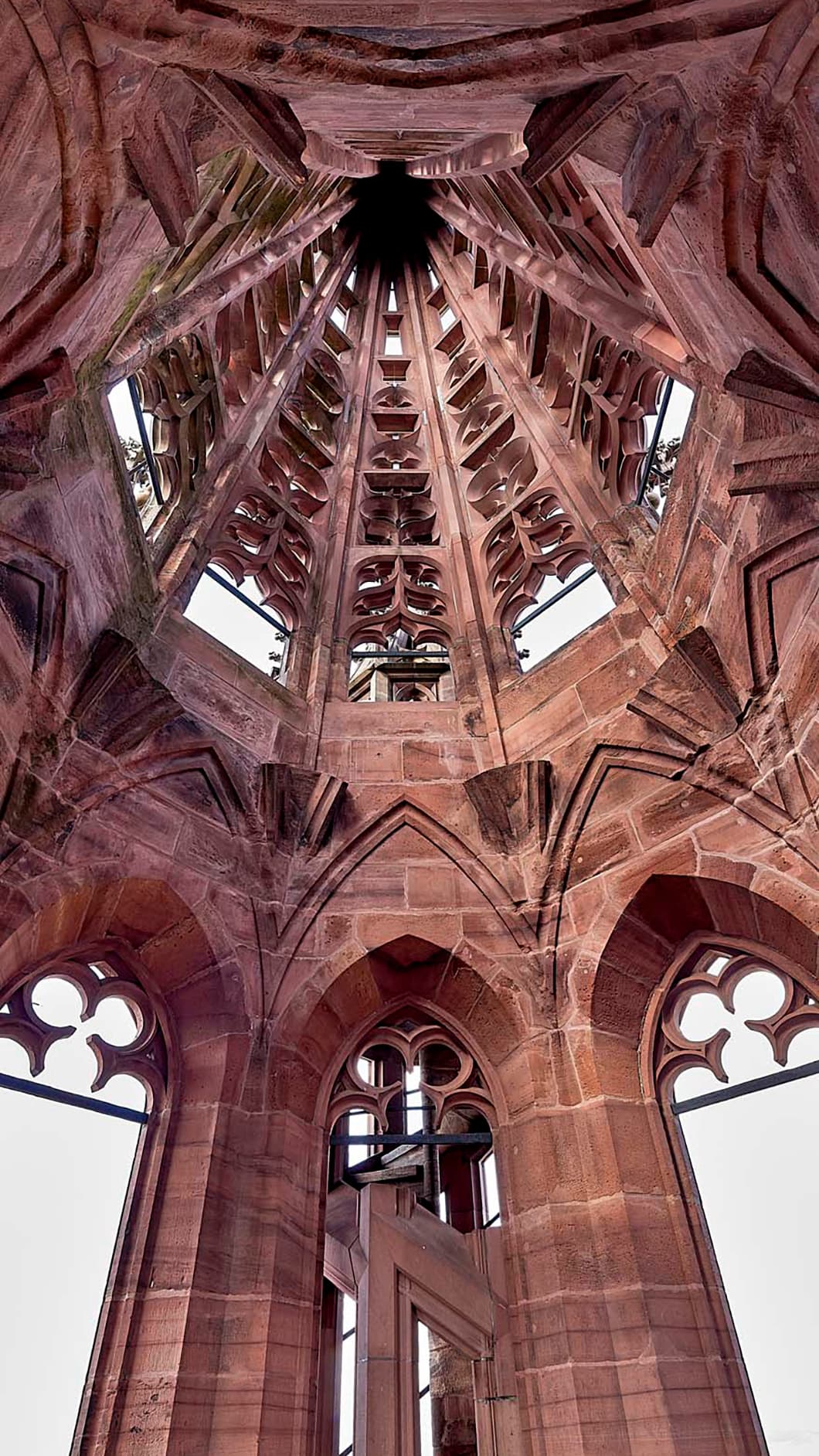
1 of 5A thousand-year building siteBasler MünsterThe Münster wears its whole history on the outside: red sandstone walls quarried nearby, a roof stitched from glazed tiles in green, yellow and black, and two towers on the west front that were never meant to look like twins.
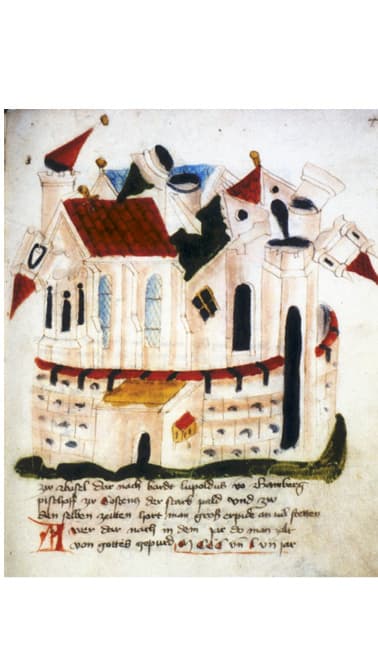
And they don't, once you know. This church took almost five centuries to finish. It was dedicated on 11 October 1019, with Emperor Heinrich II in the crowd, and it wasn't truly complete until 23 July 1500, when the last carved stone flower was hoisted onto the second tower. In between, Basel kept rebuilding it — bigger, taller, and in whatever style the age preferred.
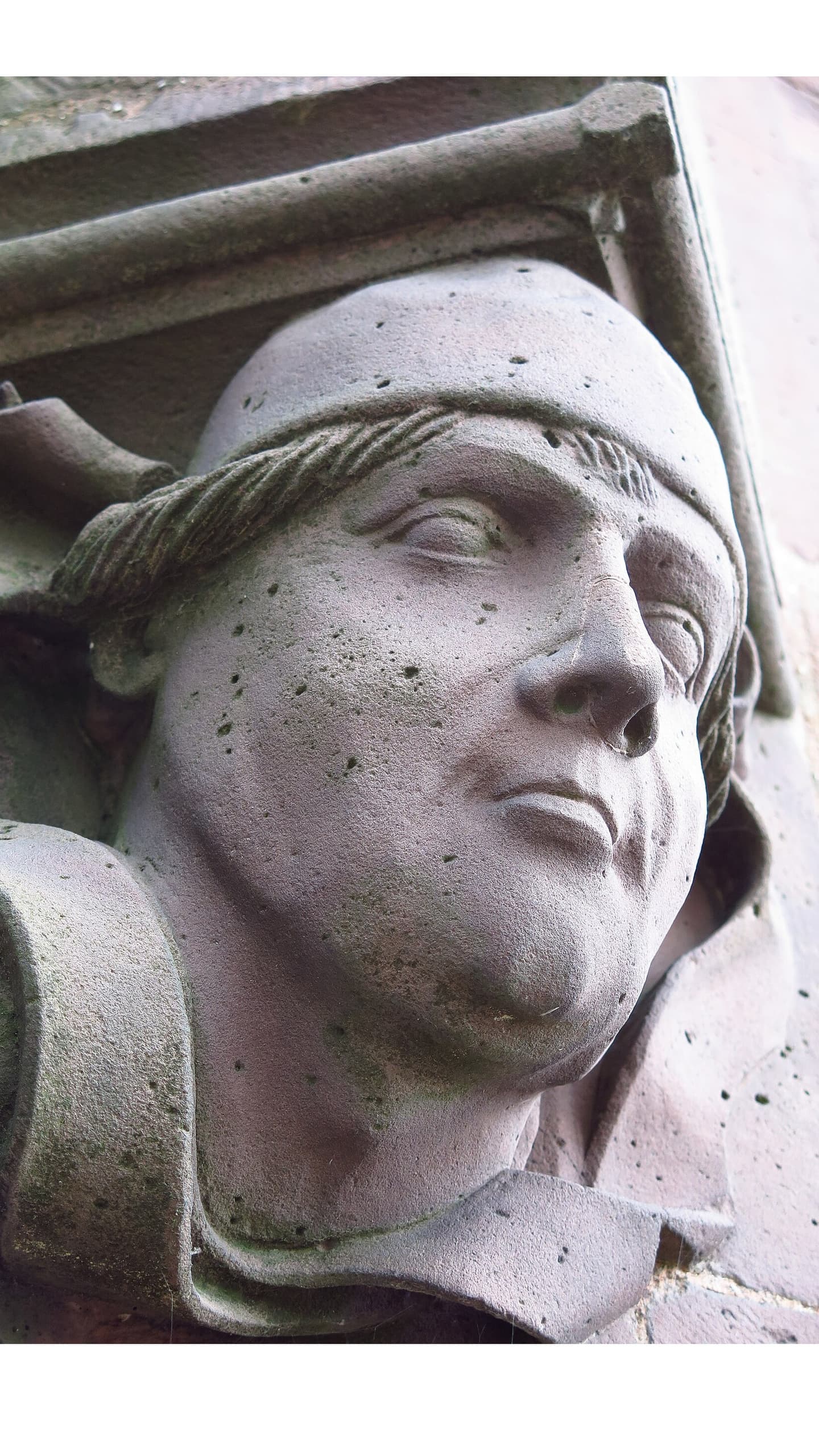
That's why the towers disagree. The left one, the Georgsturm, was designed in 1415; the right one, the Martinsturm, was finished decades later by a master mason named Hans Nussdorfer. He was proud enough of the work to carve his own face into the stone — a small portrait bust still up there on the tower's first gallery, quietly watching the city he helped shape.
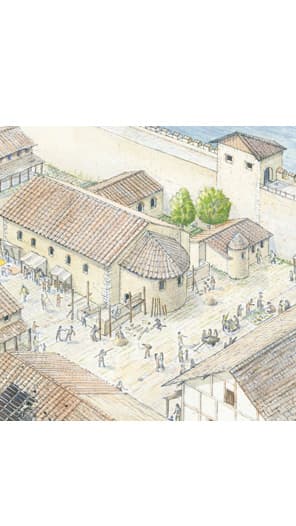
The hill beneath it all is older than any of it. Long before the church, this rise above the Rhine was a Celtic, then a Roman stronghold — Basel began here, "auf Burg," on the fortified height. The cathedral simply took the best seat in the city and never gave it back.
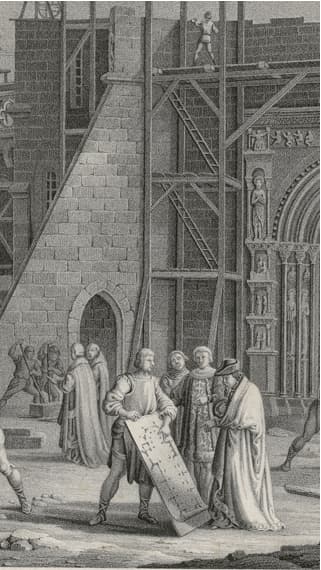
A building this old is never really finished. A dedicated workshop, the Münsterbauhütte, cared for it in the Middle Ages, fell silent for around 450 years, then started up again in 1985. Right now, somewhere, someone is cutting a fresh block of sandstone to replace one the weather has worn away.
So what stands here is partly medieval, partly 19th-century repair, partly this year's stonework — one thousand-year building site that has simply never closed.