The day the towers fell
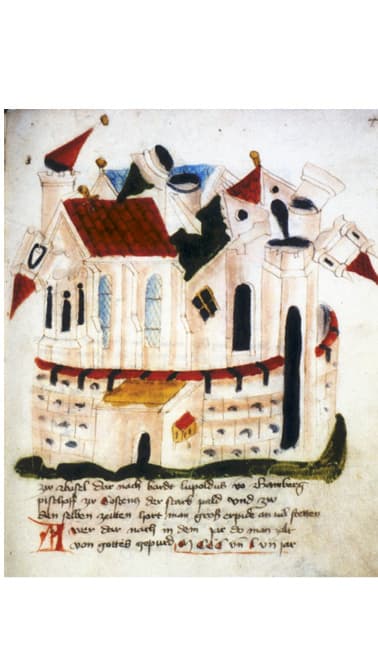
2 of 5The day the towers fellBasler MünsterThe evening of 18 October 1356 changed the shape of this building for good. A powerful earthquake struck Basel — the strongest ever recorded north of the Alps — and the fires that followed burned for days. Much of the town was wrecked, and the cathedral, then bristling with five towers, lost every one of them, along with the vaulted ceilings over the church and the crypt.
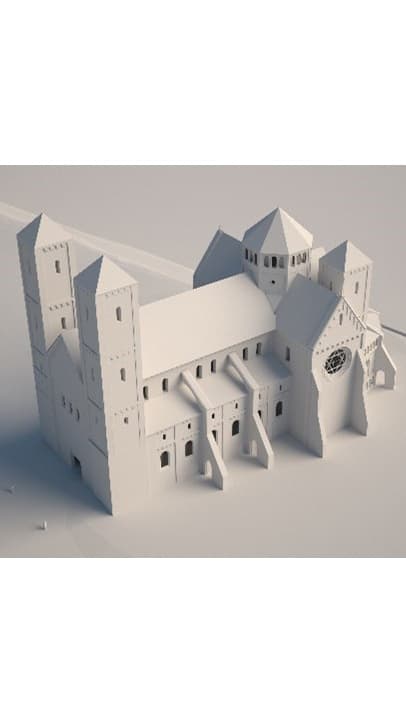
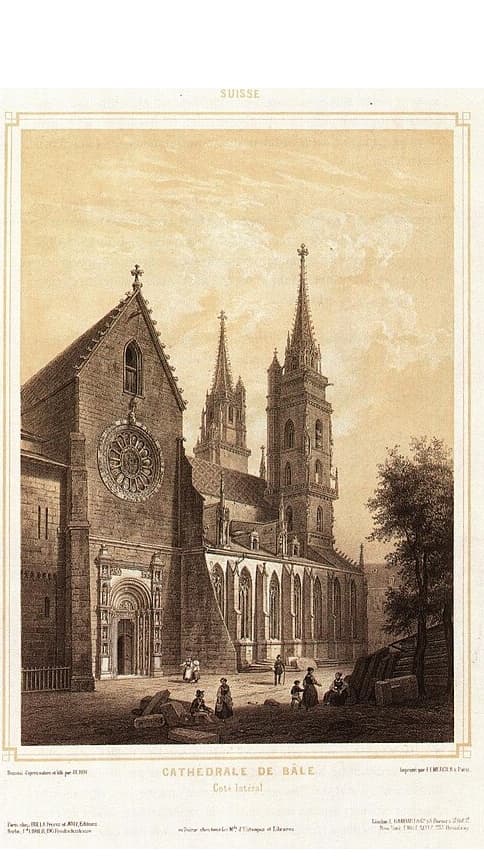
Five towers. It's hard to picture now. There were two on the west front, two flanking the choir at the east end, and one rising over the crossing at the centre. After that night, only the two front towers were ever rebuilt. The silhouette Basel is known for — twin towers against the sky — is the shape the disaster left behind.
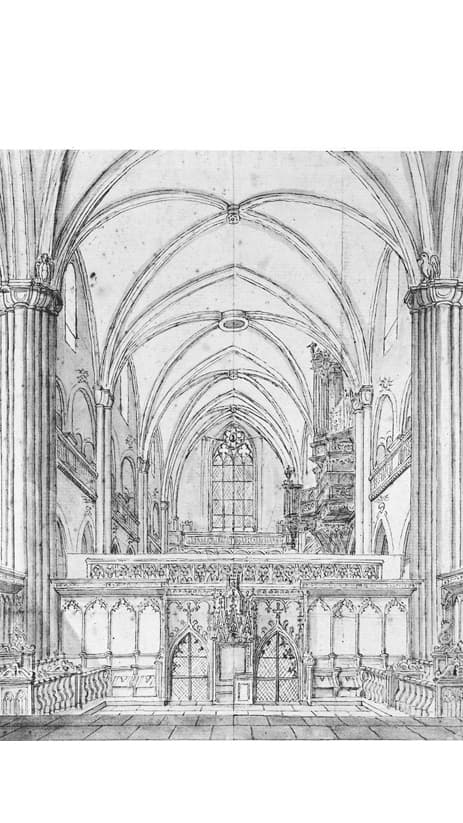
What happened next says a lot about medieval Basel. Rather than abandon the ruin, the bishop and the cathedral chapter hired one of the great building families of the age. Johannes Parler, from the workshop that also worked in Prague and across southern Germany, threw new vaults over the crypt and choir. Within seven years — by 1363 — the high altar was reconsecrated and the church was usable again.
Finishing it took far longer. The towers, the nave vaults, the whole upward reach of the building went up piece by piece over the next century and a half, until that final stone in 1500. Basel ended up with something rare: a great medieval cathedral actually brought to completion, rather than left half-built like so many others.
So the earthquake set the terms for everything that came after — the two-tower profile, the Gothic vaults overhead, the long slow rebuild. When you take in the Münster, you're looking at the recovery as much as the church itself.