The stone gate that reads the Last Judgment
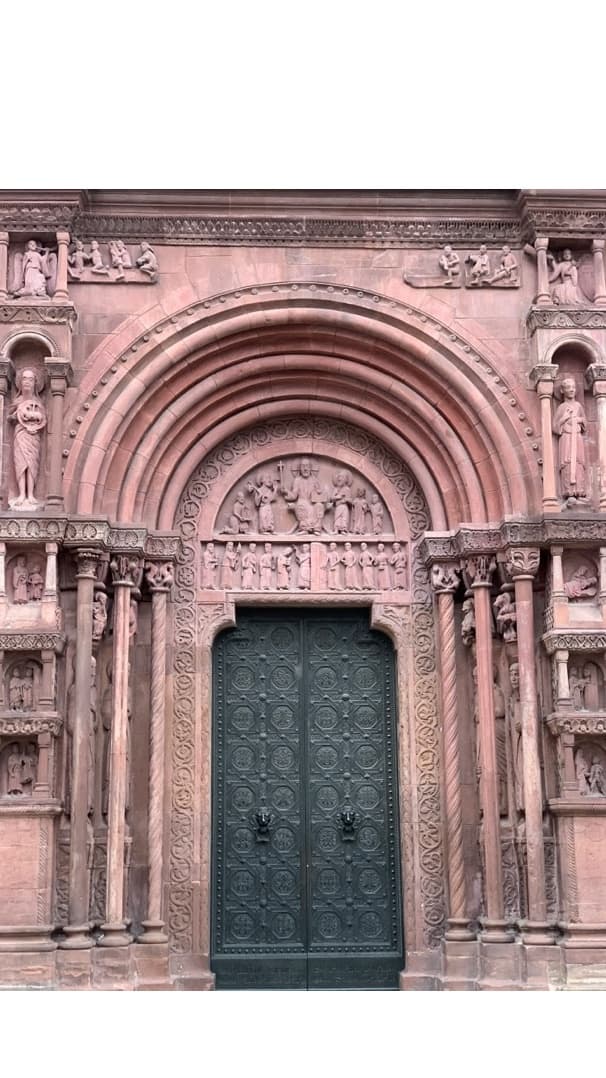
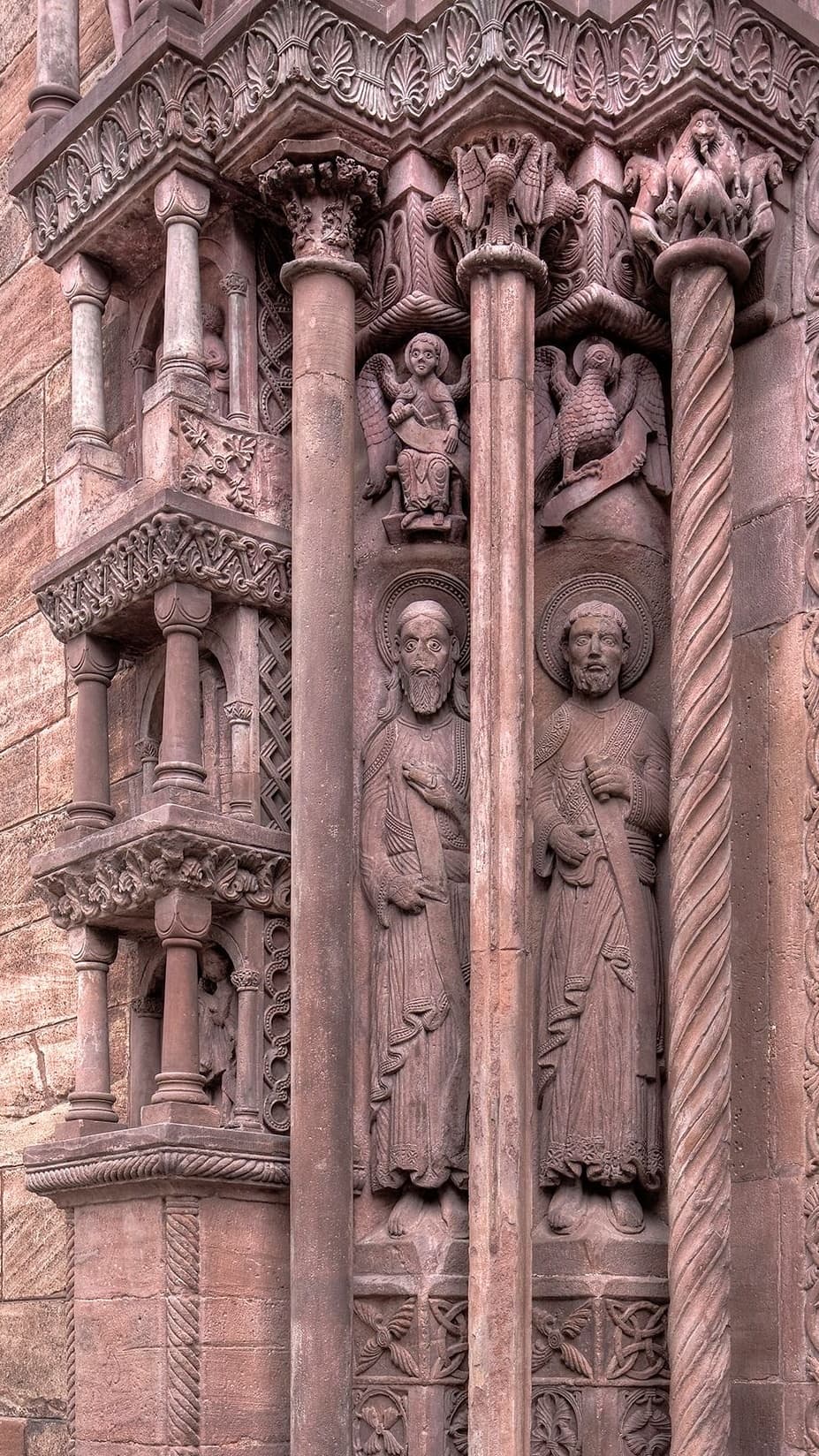
3 of 5The stone gate that reads the Last JudgmentBasler MünsterOn the north side of the Münster stands its oldest piece of storytelling: the Galluspforte, carved around 1170. It's the earliest surviving figure-portal in the whole German-speaking world — and its builders shaped it like a Roman triumphal arch, as if the faithful were marching into heaven through a gate of victory.
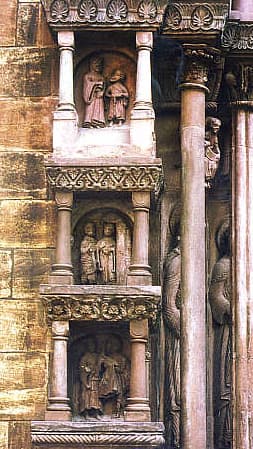
Read it from the top. In the half-circle above the doors, Christ sits as judge of the world at the end of time, ringed by apostles and the signs of the Last Judgment. Lower down, in the niches to either side, stand the six works of mercy — feeding the hungry, giving drink to the thirsty, clothing the poor, sheltering the stranger, visiting the sick, and comforting the prisoner. The message to a medieval passer-by was direct: how you treat other people is how you will be measured.
On the great feast days, processions would leave the church and return through this gate, walking back in under the gaze of Christ the judge — the carved warning above the door meeting the living crowd beneath it. (The whole portal was painted in bright colour once, and it was admired enough to be copied at Saint-Ursanne and Neuchâtel.)
There's a companion piece close by, too. Set into the north transept is a round window shaped as a Wheel of Fortune — figures clinging on and tumbling off as the wheel turns, a blunt medieval reminder that worldly luck spins and nobody stays on top for long.
Soft sandstone, more than eight centuries out in the open air, and the whole sermon is still legible. Find the six small acts of mercy in the niches; they're the heart of it.