Erasmus: a Catholic in a Protestant church
4 of 5Erasmus: a Catholic in a Protestant churchBasler MünsterSomewhere in the north aisle of the Münster lies one of the great minds of the Renaissance: Erasmus of Rotterdam. How he ended up here is a small marvel of tolerance.
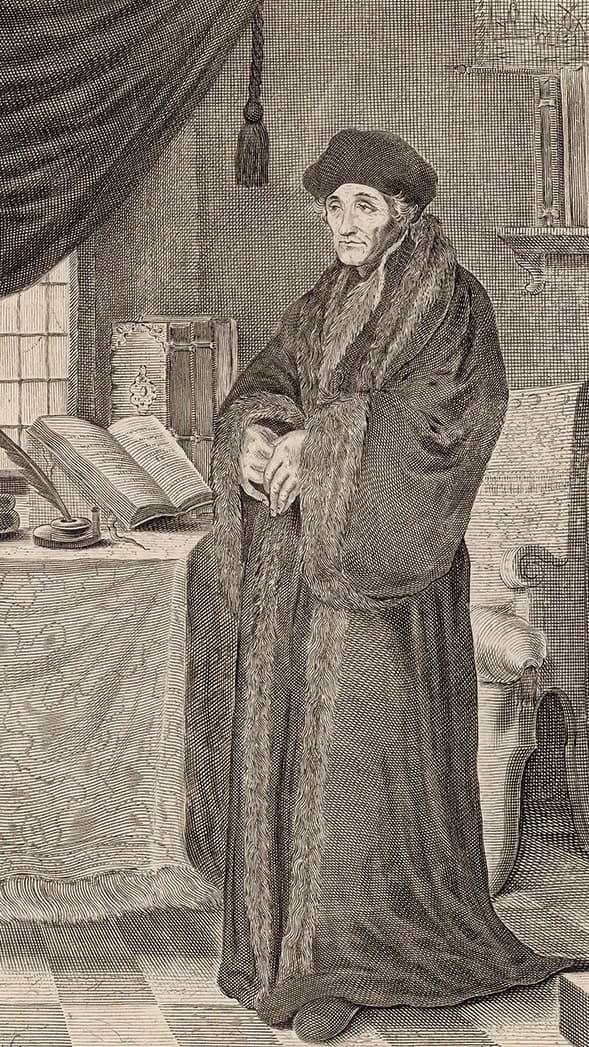
Erasmus was the star scholar of his age — a humanist whose wit and learning were read across Europe. He loved Basel and kept coming back, drawn by the city's great printing houses: he lived here in the 1510s, through the 1520s, and again at the very end of his life. His ground-breaking edition of the New Testament in the original Greek was first printed in this city, by his friend Johann Froben.
Then the Reformation arrived, and Basel turned Protestant. Erasmus, who never left the Catholic Church, moved away for a time. But he returned to his beloved city of printers, and died here in 1536, around seventy years old, loyal to the old faith to the end. The now-Protestant Münster took him in and buried him with honour — a Catholic laid to rest in a Reformed cathedral, because the city valued the man above the argument.
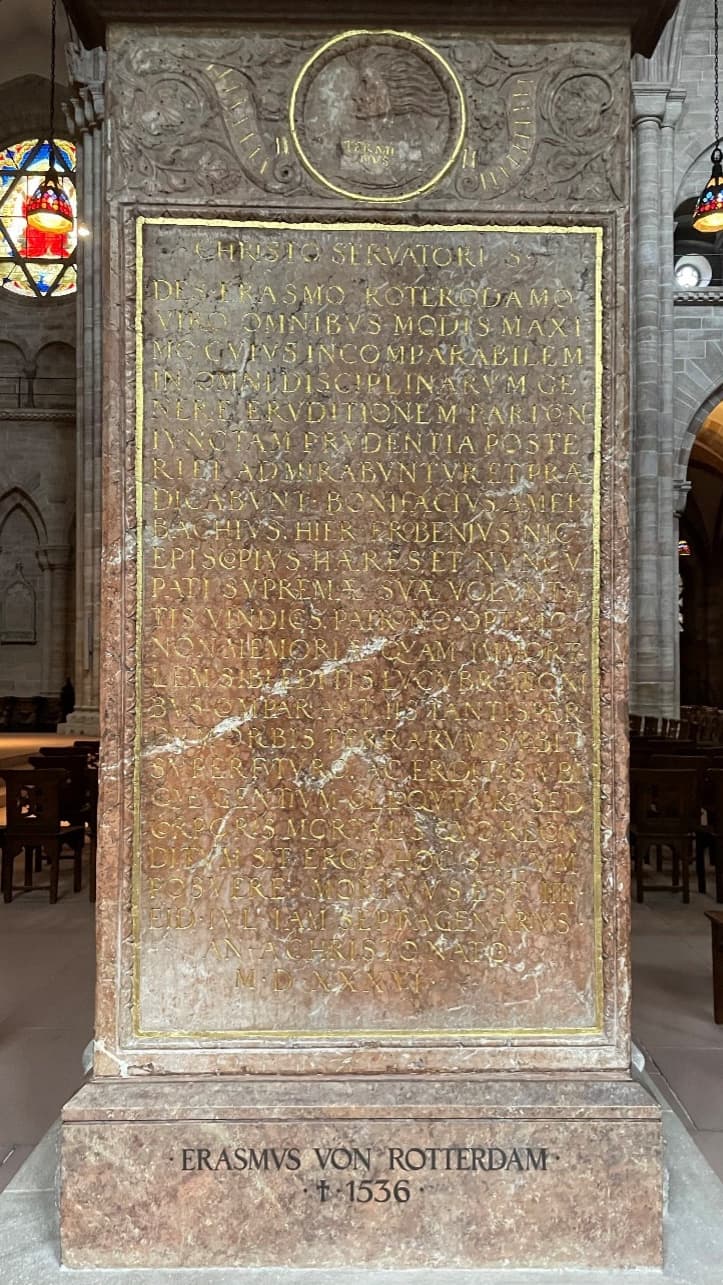
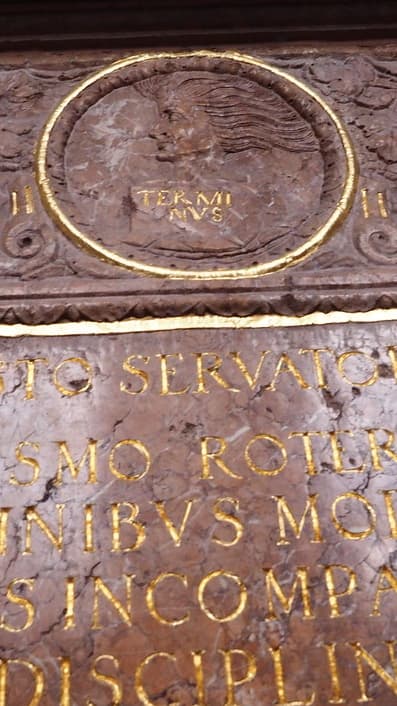
His memorial is a slab of red limestone from 1538. It doesn't show his face. Instead it shows Terminus, the Roman god of boundaries, and his personal motto: concedo nulli — "I yield to no one."
Then he vanished. Over the centuries the exact grave was lost. In the great archaeological dig of 1974, bones were uncovered beneath the church, tested, and confirmed to be his. Erasmus now rests once more at the foot of his memorial — reburied after wandering the building for some four hundred years.
Look for the red stone panel in the north aisle, and read the two words at its heart. Concedo nulli. They tell you exactly the kind of man he was.